Comprehensive Eye Exams
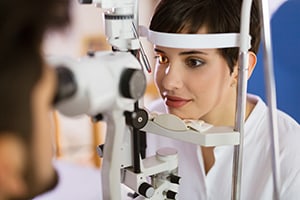 At Prestera Eye, we provide our patients with a comprehensive examination that includes a thorough evaluation of the eyes and a complete assessment of ocular health. This includes screening for common eye conditions such as cataracts, glaucoma, and macular degeneration. Additionally, we check for any signs of complications of systemic diseases, such as diabetes and hypertension, as well as adverse effects from medications.
What to Expect at Your Examination
You should allow approximately an hour and a half to two hours for your visit. During check-in, your contact information and insurance will be verified.
Next, we will review your personal and family health histories so that specific issues may be addressed. Your visual acuity will be measured to determine how well you are seeing, and your ocular motility will be tested to determine if your eyes are moving properly. We can then test your visual fields to check your side/peripheral vision. A pupil assessment will be done to check for proper pupil response to light and a slit lamp exam will be performed, which is a microscopic evaluation of the ocular tissues, such as the lids, conjunctiva, cornea, iris, and natural lens.
Your eye pressure will be measured, using tonometry, and your eyes will be dilated so we can evaluate the structures inside the eye, such as the retina, optic nerve, and blood vessels. Finally, our eye doctors can discuss examination results and treatment options with you.
Other tests may be performed, as needed. This may include:
- Color vision
- Stereopsis
- Corneal topography
- Pachymetry
- Automated visual fields
- Retinal tomography
- Angiography
- Photography
How Often Do I Need an Eye Exam?
Most healthy adults should be seen every year, but patients with active conditions such as diabetic complications, cataracts, macular degeneration, and Dry Eye should be seen as often as medically necessary.
Diabetes and Macular Degeneration
Patients with mild diabetic retinopathy need to be seen two to four times per year. Those requiring active treatment should be seen as medically necessary and may require treatment with lasers or injections. Patients with diabetic eye disease or macular degeneration should expect regular testing with retinal OCT scans, retinal photos, and fluorescein angiography
Diabetic individuals who don’t have eye disease can be seen yearly.
Glaucoma
Patients with newly diagnosed glaucoma or those suspected to have glaucoma need to receive two exams (including the initial evaluation) four to six weeks apart to complete a comprehensive workup, which includes visual field test, OCT optic nerve scanning, and optic nerve photos. Additionally, patients will often be seen one to two months after starting new medication or receiving laser treatment for a pressure check. Individuals with stable glaucoma who are receiving medication or laser treatment should be seen two to four times per year
Cataracts and Pterygium
Cataract or pterygium patients will be seen for an initial visit and should expect to come back for a pre-operative visit approximately two weeks before their scheduled surgery date.
Schedule an Eye Exam
If you are interested in scheduling an eye exam at Prestera Eye, please contact our office today. During your appointment, our skilled and experienced eye doctors can conduct a thorough evaluation and make any necessary recommendations to help maintain the health of your eyes.
Additional Eye Exam Frequently Asked Questions
What’s the difference between a vision screening and a comprehensive eye exam?
A vision screening is a basic test that checks how clearly you can see, often using an eye chart to measure distance vision. Screenings are commonly performed at schools, health fairs, or primary care offices and are designed to quickly identify potential vision problems. However, they are not a substitute for a full evaluation.
A comprehensive eye exam is performed by an optometrist or ophthalmologist and assesses much more than visual acuity. It evaluates eye health, checks for conditions like glaucoma, cataracts, and macular degeneration, and determines an accurate prescription for glasses or contact lenses.
Will my vision be blurry after dilation?
Yes, your vision will likely be blurry after dilation. The drops used to widen (dilate) your pupils make it harder for your eyes to focus, especially on close-up objects. You may also notice increased light sensitivity. These effects are generally temporary and typically last a few hours, though some people may experience mild blurriness for the rest of the day. It’s a good idea to bring sunglasses and consider having someone drive you home if needed.
Why are regular comprehensive eye exams important even if I have good vision?
Regular comprehensive eye exams are important even if you have good vision because many eye diseases develop without noticeable symptoms in their early stages. Conditions such as glaucoma, macular degeneration, and diabetic eye disease can progress silently and cause permanent vision loss if not detected early. An eye exam also evaluates overall eye health, checks for subtle prescription changes, and may reveal signs of systemic conditions such as high blood pressure or diabetes. Ultimately, early detection and timely treatment can help protect your long-term vision and overall health.
Schedule an Eye Exam
If you are interested in scheduling an eye exam at Prestera Eye, please contact our office today. During your appointment, our skilled and experienced eye doctors can conduct a thorough evaluation and make any necessary recommendations to help maintain the health of your eyes.